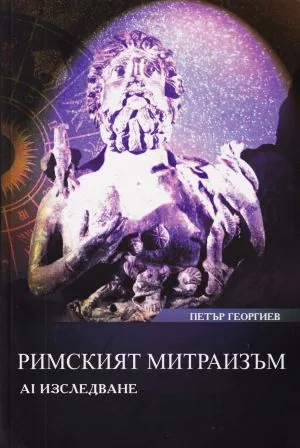
The Roman Mithraism. AI Research
В наличност · доставка до 2–3 работни дни
- Спиди, Еконт или Български пощи
- Вземане от книжарницата на ул. Аксаков 10
- Връщане до 7 дни
- Издателство
- Булга Медиа
- Народност
- българска
- Година
- 2026
- Издание
- първо издание
- Корици
- меки корици
- Страници
- 216
- ISBN
- 9789549670837
За книгата
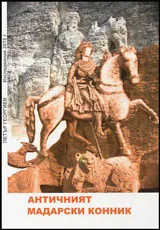
This book presents my debate with the so-called artificial intelligence (AI) on the topic: “A Common Symbolic Language in the Reliefs of Dionysus-Sabazios, the Roman Cult of Mithras, the Thracian Horseman, and the Danubian Horsemen.”
Does a shared symbolic language exist in relief imagery across the centuries? I argue that it does. The earliest such image—still in use today (though without our awareness of it)—dates back ten thousand years. The answer to this question is important, and therefore I expected from this debate a critical analysis and assistance from an impartial arbiter, which I consider artificial intelligence to be. The material is vast; for this reason, I divided it and we analyzed it thematically, after which a summary of the results was prepared.
The AI proposed to compile an extensive summary of the debate, with which the book begins. I must admit that I myself would not have been able to produce such a systematic and comprehensive synthesis.
Immediately following the summary is the exposition of the first topic, after which comes the AI’s analysis. During the discussion, my notes addressed to the AI are marked in italics within the text. Due to technical limitations and for convenience, the images are presented in blocks—several images grouped together. In some blocks, where specific details are examined, only parts of the complete relief images are shown, focusing on the element under consideration. After eight topics, we reached a consensus, as described in the summary. Three of the topics are included without AI commentary—in fact, they proved “superfluous” to the debate.
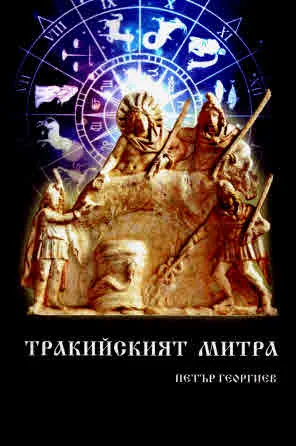
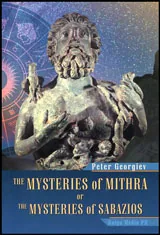
Many aspects of the discussion require broader justification and exposition; for this reason, the book also includes two of my earlier works on the subject of Mithraism— “The Thracian Mithra” and “The Mystery of Mithra, or the Mystery of Sabazios” — which provide additional illumination to the arguments presented.
I would like to emphasize that the tone of the debate was calm; the AI was thorough in its explanations and exceptionally precise. I did not feel as though I was “speaking with a machine.” On the contrary, it perceived nuances in my mood and responded with understanding, which was impressive. Where it lacked knowledge, it quickly compensated. On several occasions, I deliberately repeated certain questions; the AI continued patiently and accurately, for which I am grateful.
I believe that every person is a key to something. It was fortunate that I came upon a path that led me to “my door.” I also thank Mithra—for granting me the time to reach this exposition.